How to ask guests for Google reviews without being awkward
Happy guests will often leave a star if you make it easy. Simple ask habits that feel like hosting, not begging.
Ask when the meal went well, not when you need stars
A Google review is easiest to ask for when the guest is already smiling. The check arrives. They say the pasta was perfect. Someone thanks the server by name. That is the moment.
Do not wait until Tuesday, when you are staring at a quiet listing and wish more people had written something. Ask while the good feeling is still in the room.
You already reply when reviews land. How to answer them is the other half. This tip is about getting a few honest ones in the first place.
Make the ask feel like a favor to a neighbor
Skip the speech about algorithms. Guests do not care how Google ranks you. They care whether you treated them well.
A line that works at the table:
"If you had a good night, a quick Google review helps neighbors find us. No pressure either way."
Short. Human. Easy to say no to. That last part matters. Pressure makes people freeze, or write something they do not mean.
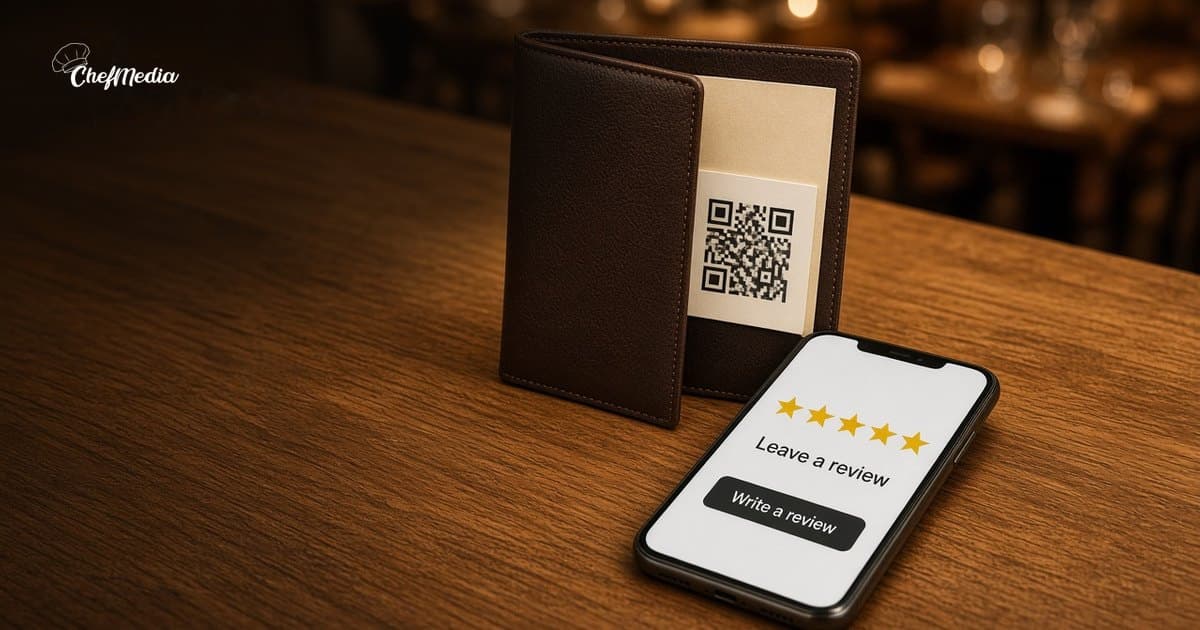
If you hate saying it out loud, put the same idea on a small card with the check, or on a QR that opens your Google review link. One sentence is enough. Fancy wording is not.
Give them the link, not a scavenger hunt
Even happy guests will not hunt for your listing on their phone while dessert cools. Make the next step one tap.
- Use the direct Google review link for your location (Google Business Profile → Ask for reviews, or the short link tools Google shows there).
- Print a QR on the check presenter, receipt, or a tiny table tent. Test it yourself once a month so it still works.
- For regulars who already follow you, a Story or post that says "tap here if you ate with us this week" can work. Link in bio is fine if the bio is not a pile of other asks.
Do not ask them to search your name, scroll past similar restaurants, and guess which pin is yours. That is where good intentions die.
Who should ask, and how often
The person they liked should ask. If the server got the compliment, that server can offer the card or the one-line ask. A manager can do it at the door on the way out. Rotate so it does not feel like a script every table hears twice.
A few habits that stay sane:
- Ask once per visit when the meal clearly went well. Not after every water refill.
- Never ask after a complaint you have not fixed. Fix first. Ask later, on another night, if they come back.
- Do not trade discounts for five stars. Google frowns on it, and guests can tell.
- Keep staff off reviewing the restaurant themselves. Fake reviews blow up later.
A quiet goal is enough: a handful of real reviews a month beats a burst of awkward asks in one weekend.
What to say when they already left one
Thank them like a host. If you see a new review the next morning, reply while it is fresh. Guests notice. So do the people still deciding where to eat.
If someone says they will write one and then forgets, leave it alone. One gentle follow-up by email or text is fine only if you already have that relationship. Do not chase.
Photos and posts still help the listing
Reviews land harder when the profile looks alive. Clear hours, a real phone number, and a few food photos make the stars feel trustworthy. Phone photos that fill tables covers the basics. When you post about the room, timing still matters.
A review ask is hosting, not marketing homework
You are not begging for content. You are making it easy for a happy neighbor to tell the next hungry person what you already showed them at the table.
Keep the ask short. Keep the link ready. Ask when the night went well. Then go back to running the room.
If writing social posts already eats the week, ChefMedia can draft those from your restaurant's website so the review habit stays on your list instead of competing with a blank caption box.