How to write restaurant Instagram captions that sound like you
Write short Instagram captions the way you talk at the door: the dish, why it is on, and how to come in.
The caption does not sound like the person at the door
You already know what to say when a regular asks what to order. You name the dish. You say why it is on tonight. You tell them to sit if there is a chair. Then you open Instagram and the sentence turns into "Experience culinary excellence." That is not you.
A caption that sounds like you is short. It uses the words you would use at the host stand. Neighbors follow a place they can picture walking into. A slogan does not put them in the car. If you would not say the line to a couple at the door, do not post it.
Say the dish, the reason, and how to come in
Before you type, say the post out loud in the dining room. Then keep only the three things a hungry person needs.
- The dish, in the name you use on the pass. "Lamb ragu" beats "our signature protein."
- Why it is worth coming for today. One reason is enough: it is the Tuesday special, the tomatoes were good, the pie just came out.
- How to come. Walk in, call, or the reservation link you already use. If you are full, say that instead of inviting them.
A caption that can go out as written:
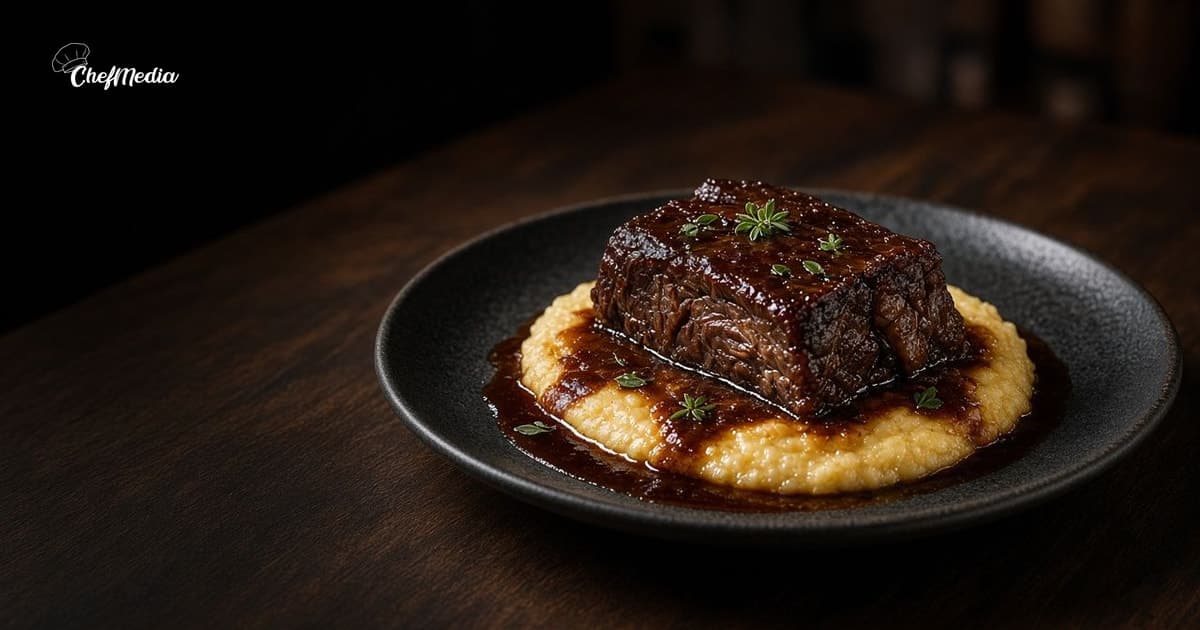
The lamb ragu is back tonight, the one with the slow Sunday sauce. A few tables open at 6:30. Walk in, or call and we will hold one.
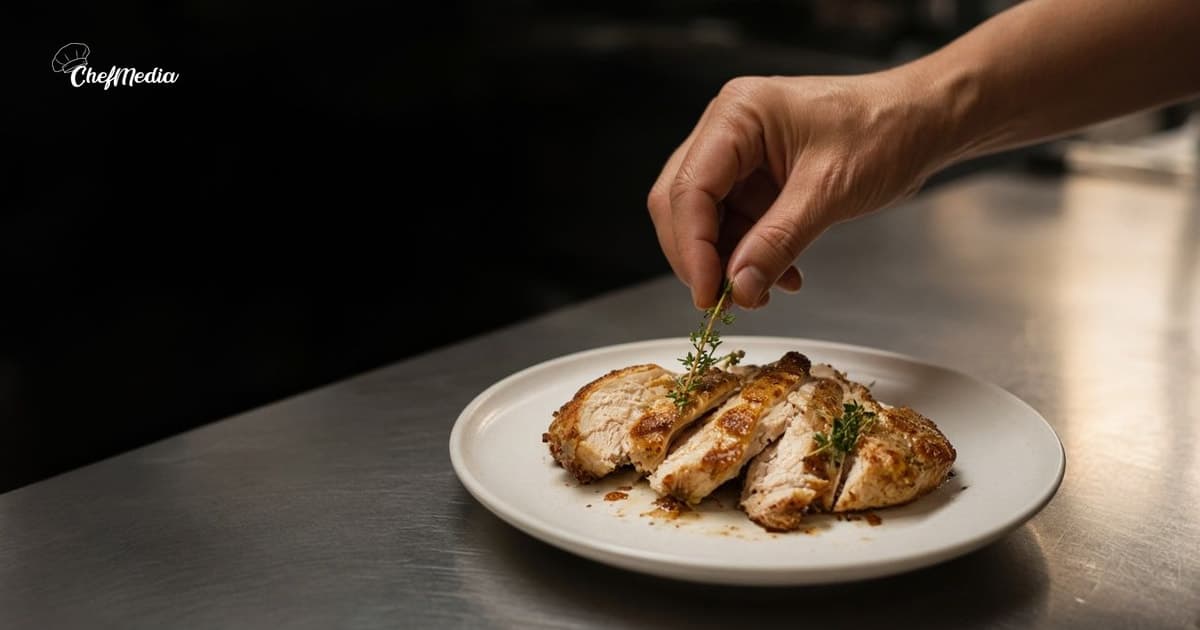
That is the whole post. You do not need a second paragraph about the farm, the chef's journey, or the brand. The photo does the looking. How to shoot that plate on a phone is the habit for the picture. The caption does the inviting.
The photo and the words should be about the same dish. A ragu caption on a salad photo makes you sound careless, not casual.
Use the words you already say
Keep it short enough to read on a phone without tapping "more" if you can. Two or three sentences is a full caption. If you need a fourth, make it the practical one: the time, or "closed Monday."
"We" and "tonight" are enough personality. You already have a voice.
Cherry pie is cooling on the pass. A slice with coffee if you want to sit for twenty minutes. We are open until 8.
Oyster mushrooms from the Saturday market, on toast with a soft egg. Lunch until 2. Come in if you are already downtown.
Read both out loud. If you stumble, the line is too long. If you would be embarrassed to say it to a regular, cut the adjective. "The Thursday chicken" is better than "our featured entrée" if that is what the servers say.
Post the same note on Facebook if that is where your regulars are. Do not rewrite it in a fancier voice for the second app. When to post is the clock for sending it. The voice does not change with the hour.
Steal a shape, then put your menu in it
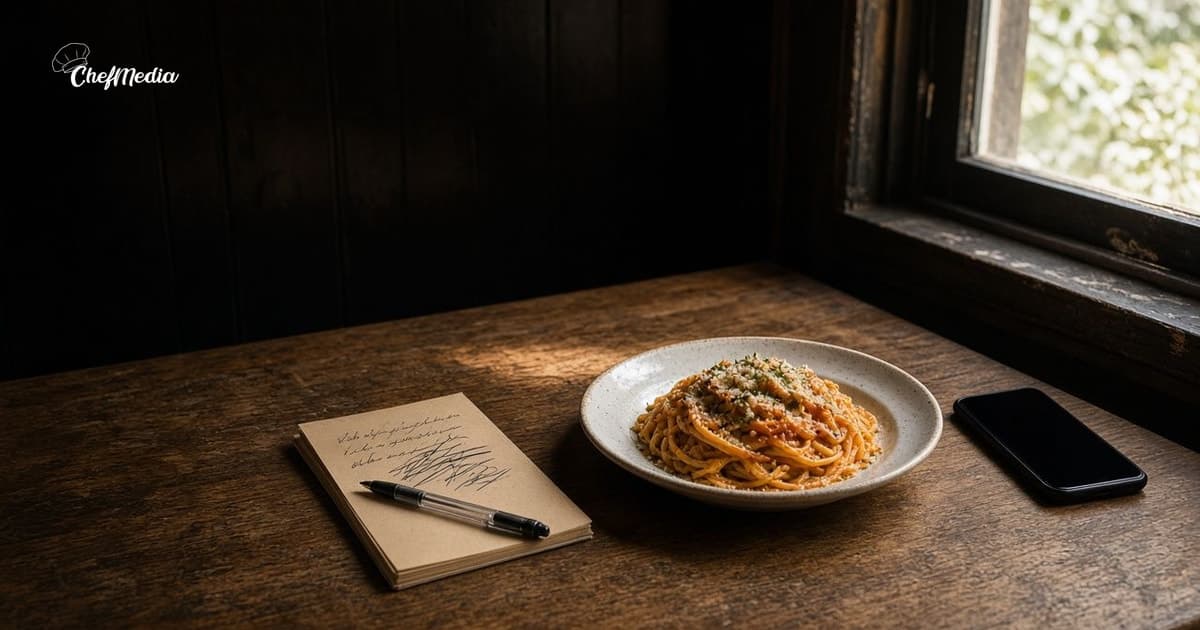
You do not need a new idea every time you open the app. Keep three shapes on a notepad by the host stand and swap the facts.
The special:
[Dish] tonight, [one true reason]. A few tables open around [time]. Walk in, or call us.
The quiet invite:
If you have not had the [dish] in a while, it is on today. We are here from [time] to [time]. Come hungry.
The honest limit:
Last of the [dish] until the weekend. If you want it, come before [time]. After that we will tell you what is left.
Fill the brackets in your own menu language. If you do not take reservations, do not paste in a line about booking. The template is a shape. The facts have to be true when someone reads them on the sidewalk.
A filled-in version:
Meatloaf tonight, the one with the vinegar glaze. A few tables open around 5:30. Walk in, or call us.
What to cut
The lines that make a caption sound hired:
- A wall of hashtags. Two local tags are enough: your town, and the dish if you want. A pile of food tags does not sound like the host stand. It sounds like you are talking to strangers who will not drive over.
- Corporate slogans. "Where every bite tells a story." "Crafted with passion." Nobody at your door talks like that, so the caption should not either.
- Three dishes, a wine pairing, and a paragraph about the neighborhood. They needed one reason to come.
- A row of emoji in place of a sentence. One is fine if you already text that way. A row of them is not a caption.
- "Link in bio" with no other instruction, when "walk in" or the phone number would be clearer.
If a line could sit on any restaurant's account in any town, it is not yours. Put the dish and the night back in. Skip "we miss you." A guilty caption does not fill a chair. A pie and a time might.
Read it once, then post
- Pick the one thing you would tell a friend to order today. If you would not steer them toward it, pick a different dish.
- Write the dish, one reason, and how to come in. Stop there.
- Read it out loud at the host stand. If it sounds like a slogan, replace the slogan with the sentence you just said.
- Check the photo against the caption. Same dish. Real light. Five frames, then choose one.
- Post it while neighbors can still change plans. Then tell whoever is on the door what you promised.
If a server writes more like the dining room than you do, let them draft it in a text and you hit post. The voice can be the person who talks to guests. On a day you mean to post, that someone is whoever is free before service.
One voice is enough
You will be tempted to add one more line so it sounds finished. That last line is usually the one that sounds like an agency. Delete it. The first three sentences were the restaurant.
Name the dish the way you say it. Give one reason it is on. Tell them how to walk in. If it still sounds like you after one read, it is ready.
If the blank box is what stalls you, ChefMedia can draft a caption from your restaurant's website so the dish and the way to book start in your words. You still read it out loud, you still change what is not true, and you still hit post.