Post the delivery that just came in the back door
Whoever receives the crate snaps it, a cook shows the dish, and a server says where it came from. One delivery can cover a few posts.
The crate comes in and the feed never sees it
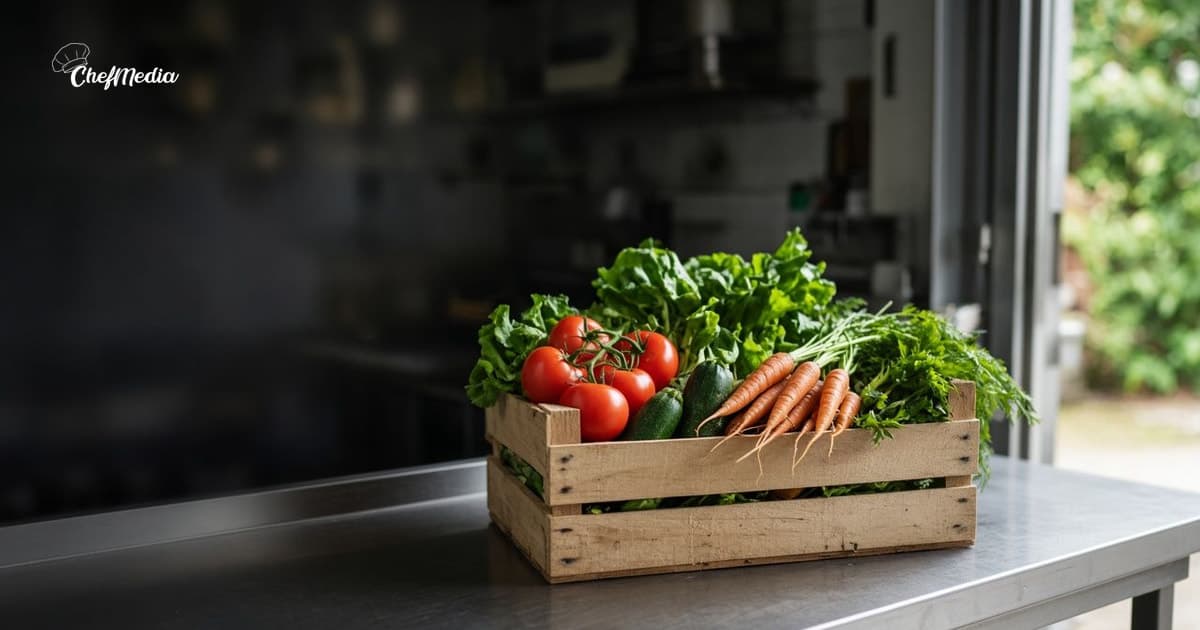
The greens are still wet. The fish is on ice. The bread is in the bag from the bakery. Someone signs for it at the back door, the crate goes on the steel table, and by service it is a plate. Guests eat it. They do not see where it came from, because the photo stayed on the phone of whoever opened the door, and that person was already on to the next box.
You do not need a farm visit. You need the delivery while it is still a delivery, and a plan so you are not the one standing in the doorway with the phone.
The kitchen already posts the work: behind-the-scenes posts. The floor already posts the room: moments from the floor. This is the crate those posts can start from.
Shoot the food, not the truck
One delivery. One subject. Fill the frame with what just arrived.
- Produce. One crate on the prep table: the greens, the tomatoes, the squash. Close enough that a follower can tell what it is. Turn the box so a printed name is not the middle of the picture. Leave the invoice in the office.
- Fish or shellfish. The pan of ice, the fish, one frame. Not a tour of the walk-in.
- Bread, cheese, or dairy. The loaf on the board, the wheel before anyone cuts it. If a label is readable, turn it or move the phone.
- Hands, if the person who received it wants to be in the frame. Hands on the crate are enough. A face and a name is a staff spotlight, and only if they said yes.
- A short clip, only if the phone is already up. The lid coming off, the bunch landing on the table. A few seconds. Then put the phone down and get the food into the cooler. The delivery comes first.
Five frames of one of those is enough. How to shoot it on a phone is the light and the frame. The open back door is often the best light in the building. Stand so the food is in that light.
Name the supplier in the caption
The photo should not depend on a sticker. Cases, stamps, and invoices carry names and addresses that do not belong in the middle of the frame. Turn them. The caption is where the farm, the boat, or the bakery gets named, and only with the name you would actually say to a guest.
Greens from the farm up the road came in this morning. They are on the fish tonight. Doors at 5.
The bread from the bakery is on the tables. We cut it to order.
If you are not sure of the name, describe the food and skip the source. A wrong farm is worse than no farm. Do not add a town, a boat, or a family story you do not have.
If that supplier has an Instagram or Facebook account and you know it is theirs, tag them on the post. Do not guess a handle from a box you half-read. A tag is a thank-you they can see, and it is how someone who follows that farm finds your door. If they asked you not to post the delivery, leave it off. Some of them sell to more than one room.
Captions that sound like you is the same rule. Name what is in the frame. Say whether a guest can still get it. Then stop.
One delivery, a few posts
The crate is one morning. It does not have to be one post, and it does not have to be three posts on the same afternoon.
- The day it arrives. Whoever opened the door posts the crate, the fish, or the bread while it is still true. If the morning is buried, leave the photo on the shared calendar for the afternoon. When to post is the clock. A photo from the door at 10 can go out at 4.
- The day it becomes a dish. A cook posts the plate and says it started as that delivery. Only if the dish is actually on the board. A crate is not a promise that the fish is on tonight.
- A different day, the floor mentions it. A server adds one sentence to the post they were already taking: the room, the pour, or the special. They do not reshoot the crate.
Two posts is enough. Three is the top, and only when the food really does show up in three different ways. If the delivery is ordinary lettuce, post the crate once and stop. The same greens three times teaches people to scroll past.
Put a name on the door, not yours
"Someone should grab the delivery" lands back on you. Write the name on the same sheet as the shifts, next to the days you already assigned in the week's posts.
- Whoever signs for the order shoots it before the crate is broken down. One post. If two people receive, the opener does it.
- A cook shoots the dish on the day it hits the board. Their words, the way they talk at the pass.
- A server mentions the source on a later shift, in the floor post they already owe. One sentence.
Your name stays off the list unless the receiver calls out. You look at the week. You do not meet the truck.
If you want a second pair of eyes, an admin can set Posts need approval. Decide that once, not at the door. The person who took the photo is still the one who posts it to Instagram and Facebook. A rewrite every time teaches them to wait for you, and a post that waits for you waits until the crate is already prep.
They use the account they already have. If the login lives only on your phone, the name on the schedule does not matter.
What stays off the feed
- The invoice, a check, or a card.
- A label or a case with a name you can read in the middle of the frame.
- A guest's face, unless that guest already said yes. If a child is in the frame, leave it out.
- The driver, unless they said yes. Shoot the food, not the person in the truck.
- The alley, the dumpster, a spill on the dock. The crate on the table is the post.
- A line that promises a dish you already sold through. Fix the line before it goes out.
The note you can copy onto next week's schedule
- Receiver: the name, the morning the order lands, one photo or a short clip of the food.
- Cook: the dish, on the day it is on the board, one line that it came from that delivery.
- Server: a different day, one sentence on the floor post they were already taking.
- Name the supplier only if you would say that name to a guest. Tag their account only if you know it is theirs.
- Posts need approval on or off, decided once.
Rotate the receiver when the same person is always the one at the door with a phone. The job is the photo. It is not a new position.
Then put the food away
The truck leaves. The crate goes into prep. One photo is already taken by the person who signed for it. The plate and the mention on the floor come later, from people who are already on those shifts. Guests see where dinner came from, and you were not standing in the doorway to show them.
ChefMedia is social media posting, handled by your restaurant staff. Cooks, servers, and managers upload and post to Instagram and Facebook themselves from one shared calendar, photos are tagged by dish automatically, storage is unlimited, an admin can set Posts need approval, and Write caption with AI runs only when someone taps it. Free for every restaurant. Sign up at chefmedia.ai (opens in a new tab).